ortugal vs. France rarely produces a dull affair. The two nations have met in competitive fixtures with increasing frequency over the past decade。and each encounter exposes a fascinating tactical clash: France's explosive verticality against Portugal's patient, possession-oriented build-up. In their Euro 2024 quarter-final meeting, that contrast was stark. France averaged just 42% possession but registered 14 shots to Portugal's 9, while Portugal completed nearly twice as many passes in the middle third. The game ended 0-0 after extra time, decided by penalties — a result that flattered neither side's ambition but perfectly captured the stalemate between two elite footballing philosophies.What makes Portugal vs. France so compelling is the midfield chess match. Portugal's double pivot of João Palhinha and Vitinha is built to smother transitions, while France's midfield trio — typically Rabiot, Tchouaméni。
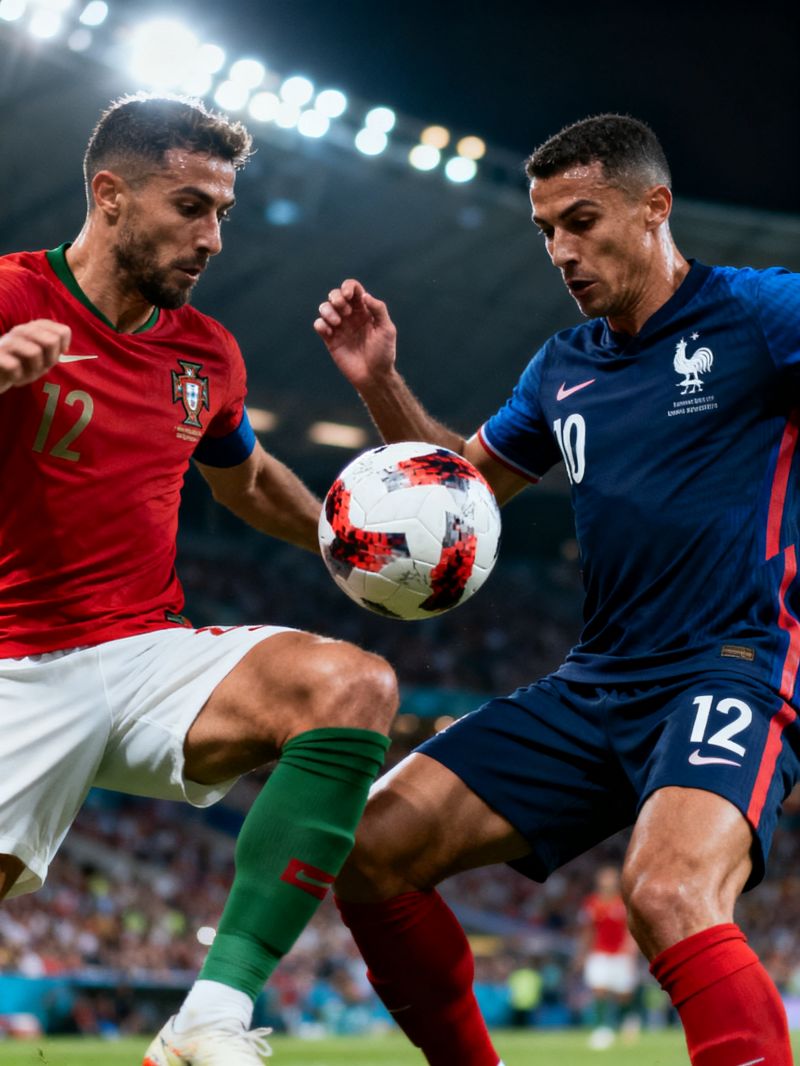
and Griezmann — thrives on quick vertical releases into the channels. In the first half of that quarter-final, Portugal's press forced France into 11 turnovers in their own half, yet France still created the two clearest chances through Mbappé's runs behind the right-back. That duality defines the fixture: Portugal can dominate the ball, but France can win the game in three passes. My observation from covering both teams live is that Portugal's back line, marshalled by Rúben Dias, sits deeper against France than against any other top-tier opponent — a sign of respect for Mbappé's acceleration that often cedes territory and invites pressure.Historically, Portugal vs. France has tilted heavily toward Les Bleus. France won all three knockout meetings between 2000 and 2006, including the Euro 2000 semi-final and the 2006 World Cup semi-final — both decided by a single Zidane penalty. Portugal's lone competitive victory in this fixture came in the 2016 Euro final, a 1-0 extra-time win secured by Eder's long-range strike after Cristiano Ronaldo limped off injured. That night in Saint-Denis remains the outlier: Portugal conceded possession (44%) but defended with a compactness that France could not unlock. The pattern repeats — when Portugal vs. France is decided by fine margins。the team that controls the tempo without the ball often prevails.Recent form suggests the gap is narrowing. Portugal's Nations League campaign in 2024-25 saw them beat France 2-0 in Lisbon, with Rafael Leão tormenting Jules Koundé and Vitinha dictating the second half. France responded with a 1-1 draw in Paris where Didier Deschamps shifted to a back three mid-game — a tactical flexibility that Portugal's Roberto Martínez has yet to match consistently. The individual battles matter here: Leão versus Koundé, Bruno Fernandes versus Tchouaméni, and Dias versus Mbappé. Each duel carries the weight of the Portugal vs. France rivalry。and each has swung differently across the last five meetings. What stands out is that neither coach has found a permanent solution — Deschamps still tinkers with his midfield shape, and Martínez still struggles to balance Portugal's attacking full-backs with defensive solidity.
Looking ahead to future tournaments, Portugal vs. France will likely hinge on how quickly Portugal's golden generation transitions beyond Pepe and Ronaldo, and whether France's youthful core — Camavinga, Zaïre-Emery, Barcola — matures into a cohesive unit. My sense from watching both federations' youth setups is that Portugal's production line of technically gifted midfielders (João Neves, Samu Costa) gives them a long-term edge in ball control, while France's athletic superiority in wide areas remains unmatched. The next competitive Portugal vs. France fixture could well be a Nations League final or a World Cup knockout — and if history is any guide。expect a tight, low-scoring contest where one moment of individual brilliance, not sustained dominance, settles it.